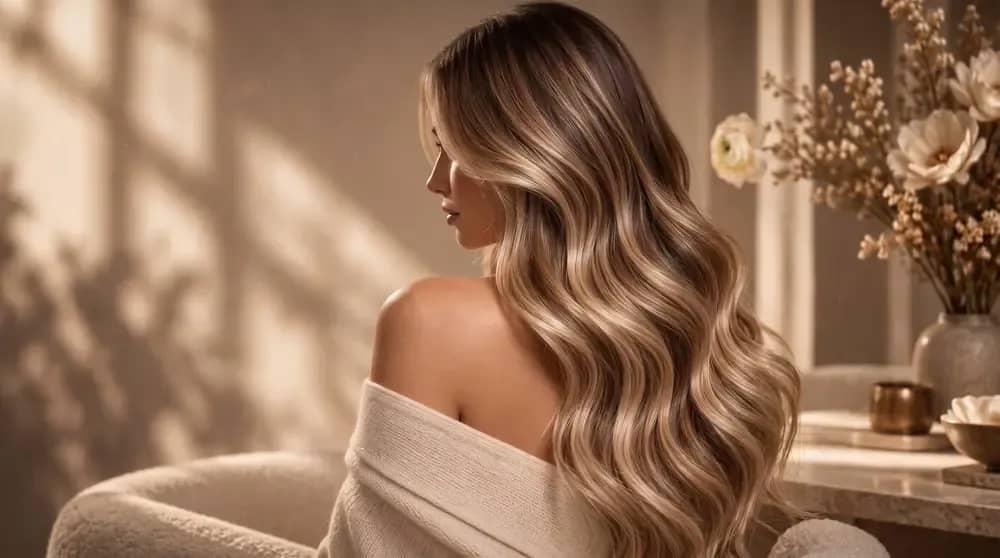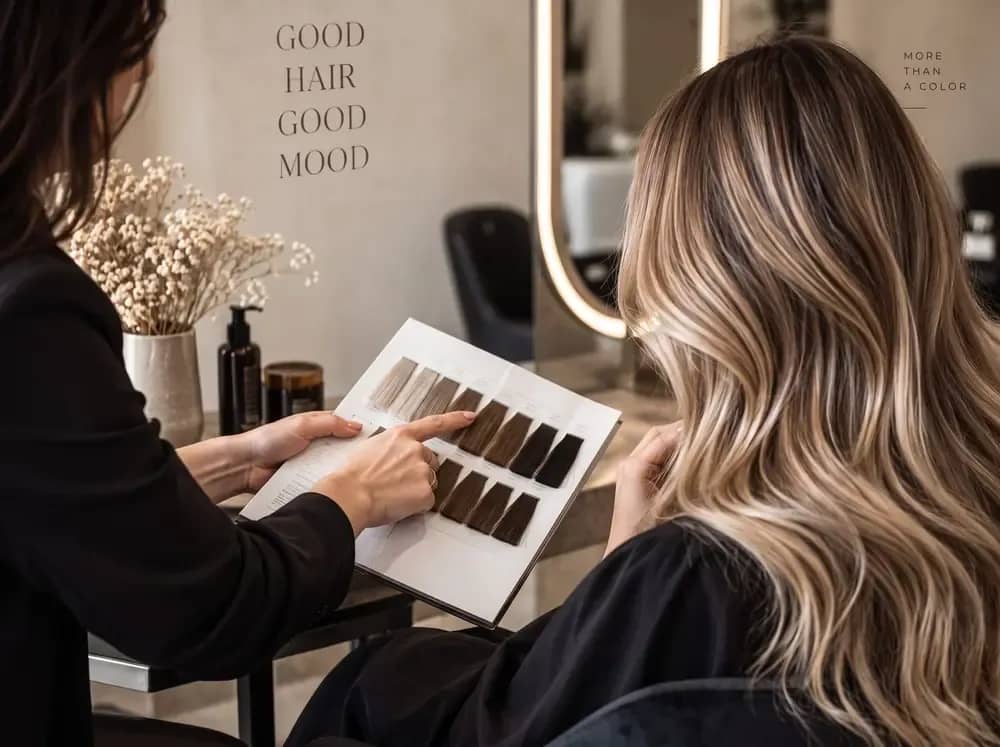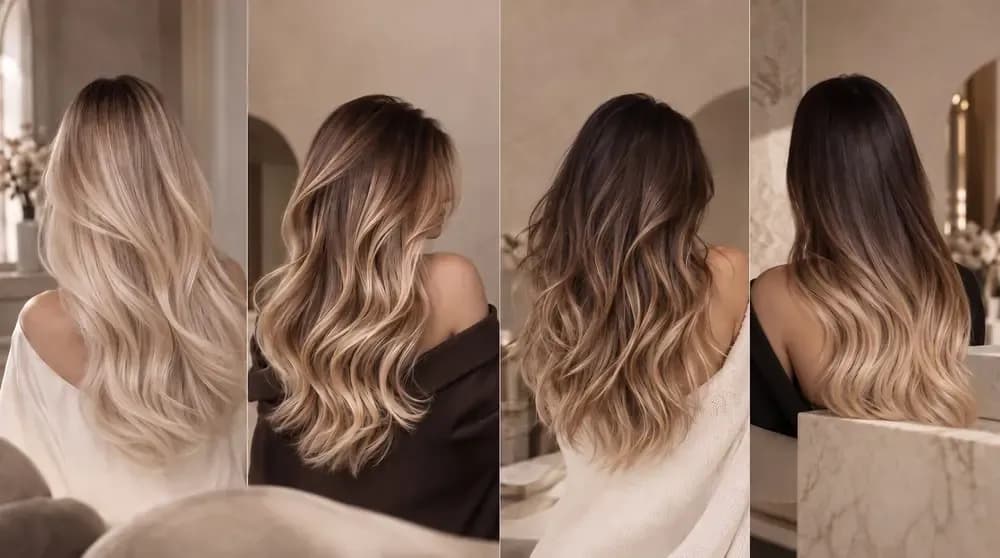
When I say technique names at a consultation, many clients hear one blur of “something complicated with light strands”. Let’s go through them so it is easier to navigate.
Ombre is the most contrasting of the four: a clear, though blended, shift from dark at the roots to light at the ends, usually with a more visible border than the others.
Balayage is a freehand technique with an accent on selected strands. It gives more natural but still visible flashes along the length, without one hard transition line like ombre.
Shatush is even softer than balayage: the color stretch mimics natural sun-lightening, so the effect looks as untouched as possible.
Airtouch is the most technically complex: strands for coloring are selected with a blow-dryer, which gives the softest, almost invisible transition and the least damage to weakened hair.
In short: as you move along ombre → balayage → shatush → airtouch, the color transition gets softer and more natural — and the technique asks more time and skill from the colorist. At the consultation I look at your starting color, length and structure and suggest the technique that will give the effect you want — contrast or as natural as possible.